A Comparative Study of Residents’ Quality of Life in Dementia Care Facilities: Traditional Settings vs. Green Care Farms
ⓒ 2025, Korean Association of Human Ecology. All rights reserved.
Abstract
This study investigates the differences in behavior and quality of life between residents with dementia living in a traditional care facility and those residing on a green care farm.
Conducted in Vancouver, Canada, and Laarbeek, the Netherlands, this observational study utilized a mixed sampling strategy that combined random and purposive sampling. Nine residents with dementia participated in the research. The physical environments were evaluated using the Therapeutic Environment Screening Survey for Nursing Homes (TESS-NH), while data on participants’ behaviors and quality of life were gathered through Dementia Care Mapping (DCM).
The evaluation of the physical environments indicated that the green care farm provides a more enriched, sensory, and homelike atmosphere compared to the traditional facility. Residents at the green care farm engaged more frequently in social interactions and demonstrated higher levels of positive engagement such as movements related to daily routines than those residing in the traditional facility.
This study suggests evidence that well-designed physical environments can exert both direct or indirect positive effects on the behavior and quality of life of older adults with dementia.
Keywords:
Older adults with dementia, Physical environment, Traditional care home, Green care farm키워드:
치매노인, 물리적 환경, 전통적인 노인시설, 그린케어팜Ⅰ. Introduction
Dementia is a syndrome caused by various diseases that gradually destroy nerve cells and damage the brain, typically resulting in a decline in cognitive function (i.e. the ability to process thought) that exceeds what is expected from normal biological ageing (WHO, 2025). Moreover, changes in behavior, emotional control, and mood are commonly observed. Ultimately, most older adults with dementia will require additional care and support to maintain their daily activities. The impacts of the syndrome extend beyond individuals with dementia, affecting their families, caregivers, society, and broader national concerns (Alzheimer’s Association, 2022).
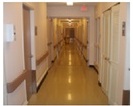
Current research on Alzheimer‘s disease and related dementias has primarily focused on the causes and treatment of these conditions (Keating & Gaudet, 2012). Due to the dominance of the medical model, the physical environments of facilities for older adults with dementia have naturally evolved to resemble institutional, hospital-like settings. These institutional dementia care facilities are characterized by specific physical features, including large-scale units, long corridors, and a double-loaded layout―meaning private rooms are located on both sides of a long corridor (Lee et al., 2014). However, such environments have generally fostered a restrictive and controlled atmosphere, in which organizational routines dictate residents’ daily activities, ultimately leading to increasing dependency over time (Jain & Hogervorst, 2025). Many studies have identified that the institutional environments for people with dementia are associated with depressive symptoms and behavioral disturbances, and negatively impact individuals’ quality of life (QoL) (Beerens et al., 2014; Calkins, 2003; Cohen-Mansfield et al., 2015; Dilani, 2006; Lee et al., 2021a, Lee et al., 2021b; Migeul et al., 2016).
There has been an ongoing debate regarding the impacts of the physical environment on patients, including older adults with dementia, particularly in relation to their well-being and QoL (Gramegna & Biamonti, 2017). Nevertheless, a growing body of research on dementia care environments underscores the pivotal role that physical settings play in shaping the QoL of vulnerable individuals, especially older adults with dementia. Several studies have demonstrated that the behaviors and QoL of this population are closely associated with aspects of their surrounding environmental factors, including the size of dining areas (e.g. Chaudhury et al., 2013; Cioffi et al., 2007), regulation of environmental stimulation (e.g. Kovach, 2000; Lee & Morelli, 2010), unit spaces that allow for privacy and personalization (e.g. Gramegna & Biamonti, 2017; Zeisel et al., 2003), and the use of way-finding cues (e.g. Carbone et al., 2025; Marquardt & Bueter, 2025; Van Buuren et al., 2025).
As research in this field has progressed, an innovative approach to dementia care has emerged―particularly in the Netherlands and Norway―in the form of green care farms, which integrate agricultural activities into care environments for older adults with dementia (Verbeek et al., 2025). Green care farms are settings where individuals with care needs, including those with dementia, can spend the day and voluntarily participate in agricultural activities (de Bruin et al., 2010). This model represents a form of therapeutic intervention aimed at mitigating common negative outcomes associated with institutional care settings, such as boredom, social isolation, and loneliness. Rather than emphasizing control and routine, green care farms seek to promote health and QoL through the restorative benefits of the farm environment as the central component of care (de Boer et al., 2015; Hassink et al., 2010; Haugan et al., 2006). Several studies have demonstrated that green care farms encourage residents to engage in activities, foster social interaction and physical movement, and offer increased opportunities for spending time outdoors (de Boer et al., 2017; Ellingsen-Dalskau et al., 2021; Finnanger-Garshol et al., 2022).
Although research in this field has been actively conducted, there remains a need for more in-depth investigation into how care environments can be designed to improve the QoL of older adults with dementia. In particular, more insight is required into the effects of different physical environmental features on the behaviors of individuals with dementia. Against this background, the present observational study aims to examine whether there are differences in the behavior and QoL of residents with dementia living in a traditional institutional setting in Vancouver, Canada, compared to those living in a green care farm setting in Mariahout, the Netherlands.
Ⅱ. Methods
This observational study was conducted in two locations: a traditional care facility in Vancouver, Canada, and a green care farm in Laarbeek, the Netherlands. Behavioral observations were conducted in three sessions per facility at approximately four-month intervals, spanning a one-year period. Owing to the different research projects involved, data collection occurred in different years: at the traditional care facility from April 2012 to March 2013, and at the green care farm from January 2024 to August 2024. Despite these temporal differences, the specific physical environments of the facilities were considered the primary contextual factor, and the behaviors of residents with dementia were assumed to be comparable across the observation periods, as similar patterns consistently emerged. A mixed sampling strategy-both random and purposive sampling-was employed, as the sample selection conditions differed between the two countries.
1. Settings
The following procedure was used for selecting facilities in Vancouver: i) Twenty dementia care facilities were identified from the list provided by the Vancouver Coastal Health Authority; ii) Following a review of information and site visits, two dementia care facilities were selected to participate in the study―one representing a traditional setting and the other a small-scale setting (see Lee et al., 2014, for a more detailed process). For the purposes of this study, only one facility was utilized: Grace Care Home, which accommodates 30 residents with dementia per unit and features a long corridor with a double-loaded layout.
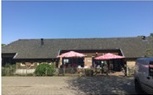
Regarding the Netherlands, the Wageningen Care Farm Institute, which has conducted research on green care farms, was asked to contact facilities that provide accommodation and 24-hour care services for older adults with dementia. The institute obtained permission from a green care farm to conduct an observational study. One such facility, Golden Village, is a green care farm that has six independent houses with 4 to 8 residents living in each house.
2. Participants
Residents eligible for the observational study were aged 60 years or older, had resided in the facility for at least one month, and were capable of ambulating, either independently or with the use of an assistive device. To facilitate behavioral observation, the study excluded residents who were bed-bound or who remained in their private rooms during the daytime. With consent from the participants and their families, a total of fourteen residents with dementia were initially enrolled in the study. During the observation period, five participants either passed away or relocated; therefore, nine residents were included in the final analyses: five from the traditional care facility Grace Care Home and four from the green care farm Golden Village.
3. Measurement
The physical environments of the two selected facilities were assessed using the Therapeutic Environment Screening Survey for Nursing Homes (TESS-NH) (Sloane et al., 2002), and data on participants’ behaviors were collected using the Dementia Care Mapping (DCM) (Bradford Dementia Group, 2005).
The TESS-NH assessment comprises six domains with 13 sub-domains: (1) Privacy, Control, and Autonomy―including unit autonomy, access to outdoors and privacy; (2) Safety, Security, Health―including aspects such as exit, control, maintenance, cleanliness, and safety; (3) Stimulation―including lighting, visual/tactile stimulation, and noise; (4) Socialization―including space and seating; (5) Personalization and Familiarity―including familiarity and homelikeness; and (6) Orientation―including orientation and cueing. Specific physical features were primarily rated on a scale from 0 to 3, ranging from ‘distinctly unpleasant attribute’ to ‘more favorable attribute’.
The behaviors and QoL of the participants were measured using the Behavioral Category Codes (BCCs) in the DCM tool. <Table 1> presents the 23 distinct behavior codes used in the BCCs. Based on the behavioral coding scheme, three QoL indicators were analyzed: levels of high potential engagement, agitation/distress, and withdrawal.

Behavior Category Codes (BCCs)
- i) High potential engagement, a key component of QoL in individuals with dementia, was associated with behavior codes A: interaction with others, D: self care, E: creative activities, F: eating or drinking, I: intellectual abilities, J: physical sport, K: walking, standing, L: leisure, O: relating to inanimate objects, P: personal care, R: religious activity, S: sexual expression, T: engagement of the senses, and V: work-like activity.
- ii) Agitated or distressed behavior corresponded to codes-K: walking with negative mood, U: communicate without receiving a response, W: repetitive self-stimulation, and Y: interaction in the absence of other.
- iii) Withdrawn behavior, defined as a lack of engagement with oneself or the surrounding environment, was indicated by codes C: withdrawn and N: sleeping, dozing.
4. Data Collection and Analysis
The primary investigator, who had completed the ‘DCM Learning Course’ certification, unobtrusively observed the selected residents in each facility during the daytime, primarily between 9:30 to 16:00. Observations were conducted at a distance of approximately 3-4 meters to avoid disturbing the residents. Each participating residents was continuously observed at 5-minute intervals in public areas such as the living room, dining room, and courtyard. For example, if a participant talked with a neighbor during one 5-minute interval and then consumed coffee and a snack in the subsequent interval, the behaviors were coded as ‘A’(interaction with others) and ‘F’ (eating or drinking), respectively. Data collection at each unit was carried out over two or three days to obtain a minimum of four hours of complete data per resident. To enhance data reliability, observations were carried out in three separate sessions over the course of one year at each facility.
Data were analyzed using Microsoft Excel and SPSS Statistics_v. 31. Descriptive statistics were calculated, and the Shapiro-Wilk test was used to assess the normal distribution. An independent t-test were performed to compare behaviors and QoL scores between the study groups, with the significance level set at p < .05.
5. Ethical Considerations
Ethical approvals were obtained from the Institutional Review Board at Simon Fraser University, Vancouver, Canada and Yonsei University, Seoul, South Korea. The purpose of the study and the observational procedures were informed to all participants and their families. Written informed consent was collected prior to the commencement of observations. To ensure confidentiality, pseudonyms were assigned to the participating facilities and individuals in all documentation.
Ⅲ. Results
The general characteristics of the participating residents with dementia, along with the physical environments of the two facilities and the results of t-test analysis, are summarized in <Table 2>. The Grace Care Home cohort comprised three females and two males, with a mean age of 77.6 years (range: 62-88). Meanwhile, the Golden Village cohort consisted of two female and two male residents, with a mean age of 86.5 years (range: 85-88). Overall, participants from Grace Care Home exhibited a younger age profile compared to their counterparts from Golden Village. The institutional care facility, Grace Care Home, provided mixed room types accommodating up to 30 residents per unit. In contrast, the green care facility, Golden Village, offered exclusively single-room accommodations, housing 4 to 8 residents per unit.
General Characteristics of the Subjects and Results of t-test on Physical Environment
Results from the t-test on the physical environmental characteristics indicated no significant differences between the two facilities in the categories of privacy/control/autonomy, safety/security, socialization, and orientation. However, statistically significant differences were observed in the categories of stimulation (t(19)= -5.20, p < .001) and personalization/ homelikeness (t(5) = -11.07, p < .01). These findings suggest that Golden Village provided an environment characterized by more positive visual, tactile, and auditory stimulation, as well as a more personalized and homelike atmosphere, compared to its institutional counterpart.
The distribution of behavioral category profiles across the three time sessions (T1-T3) is presented in <Table 3>, along with the t-test results for levels of positive potential engagement, agitated behavior and withdrawn behavior. Statistically significant differences were found in two behavioral categories: ‘interaction with others’ (code A) (t(2.1)= -4.87, p < .05) and ‘sleeping or dozing’ (code N) (t(2.1)= -7.80, p < .05). These findings indicate that residents of Golden Village engaged in over three times as many interactions with neighbors, staff, or animals (e.g., dogs and horses) compared to those at Grace Care Home. In contrast, participants from Grace Care Home showed a greater tendency to sleep or doze during the daytime than their counterparts at Golden Village. With respect to ‘walking, standing, or moving activities’ (code K), although the difference was not statistically significant, the mean values revealed a noticeable trend: residents at Golden Village engaged in more walking, standing and moving activities than those at Grace Care Home.
Distribution of Behavior Codes and Results of t-test
The t-test results exhibited statistically significant difference in the level of high potential engagement (t(4)= -4.03, p < .05), whereas no difference in the withdrawn behavior and the agitated and distressed behavior. Considering high potential engagement as a key factor contributing to QoL, residents from Golden Village demonstrated greater potential for positive engagement than those from Grace Care Home. With respect to withdrawal―manifested as disengagement, sleeping, or dozing―although the difference was not statistically significant, participants from Grace Care Home were more than ten times as likely to show no signs of engagement with themselves or the external environment compared to those from Golden Village.
Ⅳ. Discussion and Conclusion
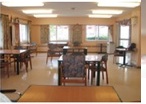
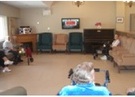
This behavior observational study was conducted to examine the influence of the physical environment on the behavior and QoL of individuals with dementia residing in two distinct care home settings; a traditional institutional facility and a green care farm. The physical environment assessment revealed that the green care farm, Golden Village, offers a more enriched sensory environment―featured by enhanced visual, tactile, and auditory stimulation― and homelike atmosphere than the traditional facility, Grace Care Home. Looking more closely, the green care farm offers a personalized residential environment that allows residents to bring their own belongings, thereby fostering a sense of individuality. In contrast, the traditional facility adopts a standardized spatial layout characterized by long corridors, double-loaded plan and semi-private rooms, which collectively create a hospital-like atmosphere.
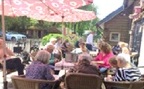
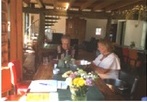
Based on the DCM data, participants at the green care farm more frequently engaged in social interactions with their surroundings and exhibited higher levels of potential positive engagement―such as general movement related to daily routines―compared to residents at the traditional facility. Looking at their actual daily lives, after having breakfast, the residents at Golden Village move to a certain house that functions similarly to a daycare center. There, they engage in social interactions with neighbors and staff, listen to music, or go for a walk with the staff. During lunch preparation, residents with dementia are involved in tasks such as ingredient preparation, often while talking with staff members. This approach reflects an intentional effort to preserve normalcy in daily life, with staff members encouraging residents to use their remaining functional abilities. These findings support the notion that a physical environment characterized by enriched sensory input, personalization, and a homelike atmosphere can serve as a critical environmental factor enabling individuals with dementia to sustain daily life activities in a natural and uninterrupted manner. The results are consistent with the study by Steinmann et al.(2025), which demonstrated that green care farms facilitate residents’ engagement in meaningful activities while promoting autonomy and freedom in daily life (Steinmann et al., 2025). Similarly, these findings align with the research by de Boer and colleagues(2017), who found that the residents of green care farms participated significantly more often in both indoor and outdoor activities compared to their counterparts in traditional nursing homes (de Boer et al., 2017).
Meanwhile, participants at the traditional facility were more likely to exhibit limited or no engagement with their surrounding environment, frequently spending time sleeping and dozing―behaviors associated with a comparatively lower quality of life. This may be attributed to the absence of a positive stimulus and homelike atmosphere that stimulates interest and engagement, as well as a lack of appropriate programs or activities. Considering that those at Grace Care Home were of a younger age group than their counterparts, yet demonstrated lower levels of social interaction and engagement, it may be inferred that the unstimulating institutional environment is directly or indirectly associated with lower levels of residents’ quality of life. These findings are consistent with previous studies that individuals with dementia living in a hospital-like, large-scale care facility often lack sufficient support to enhance their well-being (Cohen-Mansfield et al., 2015; Lee et al., 2021a; Rom et al., 2025). Furthermore, the results corroborate previous studies indicating that in environments lacking positive stimulation, older adults with dementia are more likely to display behavioral symptoms such as agitation and non-nutritive (inedible) eating behaviors (Lee & Morelli, 2010), along with increased levels of apathy or agitation (van Weert et al., 2004). In support of this, Cohen-Mansfield et al.(2009) and Cohen-Mansfield et al.(2015), in their investigations of the interaction mechanisms between individuals with cognitive impairments and environmental stimuli, found that specific environmental characteristics can exert either beneficial or detrimental influences on the engagement and behavioral outcomes of residents with dementia (Cohen-Mansfield et al., 2009; Cohen-Mansfield et al., 2015).
One limitation of this study lies in the relatively small number of participating care facility and residents, which may constrain the generalizability of the findings. Additionally, data collection occurred over different periods due to the involvement of separate research projects, further limiting the extent to which the results can be generalized. Despite these limitations, the study’s significance remains substantial, as the volume and depth of the observational data were sufficient to support a robust analysis. Notably, this study holds particular value given the limited domestic awareness and research on green care farms―a relatively novel approach to dementia care for older adults.
This study supports that the physical environment can directly or indirectly influence the behavior and quality of life among the older adults with dementia. Future studies need to examine the physical environment of care facilities as a potential factor influencing staff experiences within the work environment.
Acknowledgments
This work was supported by the Basic Science Research Program through the National Research Foundation of Korea (NRF) grant funded by the Korea government (RS-2022-NR069362).
REFERENCES
-
Alzheimer’s Association (2022). 2022 Alzheimer’s Disease Facts and Figures. Alzheimer’s & Dementia, 18(4), 700-789.
[https://doi.org/10.1002/alz.12638]

-
Beerens, H. C., Sutcliffe, C., Renom-Guiteras, A., Soto, M. E., ... & Hamers, J. P. H. (2014). Quality of life and qualtiy of care for people with dementia receiving long term institutional care or professional home care: the European Right Time Place Care Study. Journal of the American Medical Directors Association, 15(1), 54-61.
[https://doi.org/10.1016/j.jamda.2013.09.010]
- Bradford Dementia Group (2005). DCM 8 User’s Manual: The DCM Method, 8th Edition. Bradford: University of Bradford.
- Calkins, M. (2003). Powell Lawton’s contributions to long-term care settings. In R. J. Scheidt & P. G. Windley(Eds.), Physical Environments and Aging(pp.67-84). N.Y.: The Haworth Press, Inc.
-
Carbone, E., Miola, L., Borella, E., & Pazzaglia, F. (2025). Dementia-friendly design: Towards minimizing spatial disorientation in residential care homes. In K. Charras, E. Hogervorst, S. Wallcook, S. Kuliga, & B. Woods(Eds.), Creating Empowering Environments for People with Dementia(pp.195-204). London & NY: Taylor & Francis Group.
[https://doi.org/10.4324/9781003416241-23]
-
Chaudhury, H., Hung, L., & Badger, M. L. (2013). The role of physical environment in supporting person-centered dining in long-term care: A review of the literature. American Journal of Alzheimer’s Disease & Other Dementias, 28(5), 491-500.
[https://doi.org/10.1177/1533317513488923]
-
Cioffi, J. M., Fleming, C., Wilkes, L., Sinfield, M., & Miere, J. L. (2007). The effect of environmental change on residents with dementia: The perceptions of relatives and staff. Dementia, 6(2), 215-231.
[https://doi.org/10.1177/1471301207080364]
-
Cohen-Mansfield, J., Dakheel-Ali, M., & Marx, M. S. (2009). Engagement in persons with dementia: the concept and its measurement. The American Journal of Geriatric Psychiatry, 17(4), 299-307.
[https://doi.org/10.1097/JGP.0b013e31818f3a52]
-
Cohen-Mansfield, J., Dakheel-Ali, M., Marx, M. S., Thein, K., & Regier, N. G. (2015). Which unmet needs contribute to behavior problems in persons with advanced dementia?. Psychiatry Research, 228(1), 59-64.
[https://doi.org/10.1016/j.psychres.2015.03.043]
-
de Boer, B., Hamers, J. P. H., Beerens, H. C., Zwakhalen, S. M. G., ... & Verbeek, H. (2015). Living at the farm, innovative nursing home care for people with dementia-Study protocol of an observational longitudinal study. BMC Geriatrics, 15, 144.
[https://doi.org/10.1186/s12877-015-0141-x]
-
de Boer, B., Hamers, J. P. H., Zwakhalen, S. M. G., Tan, F. E. S., ... & Verbeek, H. (2017). Green care farms as innovative nursing homes, promoting activities and social interaction for people with dementia. Journal of the American Medical Directors Association, 18(1), 40-46.
[https://doi.org/10.1016/j.jamda.2016.10.013]
-
de Bruin, S., Oosting, S., van der Zijpp, A., Enders-Slegers, M., & Schols, J. (2010). The concepts of green care farms for older people with dementia: An integrative framework. Dementia, 9(1), 79-128.
[https://doi.org/10.1177/1471301209354023]
- Dilani, A. (2006). Psychosocially supportive design. In A. Dilani(Ed.), Design & Health IV: Future Trends in Healthcare Design(pp.13-22). Sweden: International Academy for Design and Health.
-
Ellingsen-Dalskau, L., de Boer, B., & Pedersen, I. (2021). Comparing the care environment at farm-based and regular day care for people with dementia in Norway-An observational study. Health Society Care Community, 29(2), 506-514.
[https://doi.org/10.1111/hsc.13113]
-
Finnanger-Garshol, B., Pedersen, I., Patil, G., Eriksen, S., & Ellingsen-Dalskau, L. H. (2022). Emotional well-being in people with dementia-A comparative study on farm-based and regular day care services in Norway. Health Society Care Community, 30(5), e1734-1745.
[https://doi.org/10.1111/hsc.13601]
-
Gramegna, S. M., & Biamonti, A. (2017). Environment as non pharmacological intervention in the care of Alzheimer’s disease. The Design Journal, 20 (sup1), S2284-S2292.
[https://doi.org/10.1080/14606925.2017.1352744]
-
Hassink, J., Elings, M., Zweekhorst, M., van den Nieuwenhuizen, N., & Smit, A. (2010). Care farms in the Netherlands: attractive empowerment-oriented and strengths-based practices in the community. Health Place, 16(3), 423-430.
[https://doi.org/10.1016/j.healthplace.2009.10.016]
- Haugan, L., Nyland, R., Fjeldavli, E., Meistad, T., & Braastad, B. O. (2006). Green care in Norway. In J. Hassink & M. van Dijk(Eds.), Farming for Health: Green Care Farming across Europe and the United States of America(pp.109-126). The Netherlands: Springer.
-
Jain, M., & Hogervorst, E. (2025). Use of theoretical models in dementia-inclusive design. In K. Charras, E. Hogervorst, S. Wallcook, S. Kuliga, & B. Woods(Eds.), Creating Empowering Environments for People with Dementia (pp.15-29). London & NY: Taylor & Francis Group.
[https://doi.org/10.4324/9781003416241-3]
-
Keating, N. & Gaudet, N. (2012). Quality of life of persons with dementia. The Journal of Nutrition, Health & Aging, 16(5), 454-456.
[https://doi.org/10.1007/s12603-011-0346-4]
-
Kovach, C. R. (2000). Sensoristasis and imbalance in person with dementia. Journal of Nursing Scholarship, 32(4), 379-384.
[https://doi.org/10.1111/j.1547-5069.2000.00379.x]
-
Lee, S. Y., Chaudhury, H., & Lee, S. J. (2014). Effects of physical environment on the behaviors of residents with dementia: A comparisons between a small-group unit and a traditional care unit. Journal of Civil Engineering and Architecture, 8(11), 1353-1363.
[https://doi.org/10.17265/1934-7359/2014.11.001]
- Lee, S. Y., Hung, L., Chaudhury, H., & Morelli, A. (2021a). Effects of physical en,vironment on quality of life among residents with dementia in long-term care facilities in Canada and Sweden: A longitudinal study in a large-scale institutional setting versus a small-scale home like setting. Architectural Research, 23(2), 19-28.
-
Lee, S. Y., Hung, L., Jung, H., & Chaudhury, H. (2021b). Role of physical environment in quality of life among residents in dementia care facilities through a longitudinal observational study: For facilities in Canada and South Korea. Journal of the Korean Housing Association, 32(6), 23-32.
[https://doi.org/10.6107/JKHA.2021.32.6.023]
-
Lee, S. Y., & Morelli, A. (2010). Multi-sensory environment and agitated behavior in ageing residents with dementia. Architectural Research, 12(1), 1-8.
[https://doi.org/10.5659/AIKAR.2010.12.1.1]
- Marquardt, G., & Bueter, K. (2025). Architectural design guidance for general hospitals. In K. Charras, E. Hogervorst, S. Wallcook, S. Kuliga, & B. Woods(Eds.), Creating Empowering Environments for People with Dementia(pp.157-167). London & N.Y.: Taylor & Francis Group.
-
Miguel, S., Alvira, M., Farré, M., Risco, E., ... & Zabakegui, A. (2016). Quality of life and associated factors in older people with dementia living in long-term institutional care and home care. European Geriatric Medicine, 7(4), 341-351.
[https://doi.org/10.1016/j.eurger.2016.01.012]
-
Rom, Y., Morag, I., Palgi, Y., & Isaacson, M. (2025). Correlations between the architectural plans of dementia units and residents’ well-being. Scientific Reports, 15, 31235.
[https://doi.org/10.1038/s41598-025-14586-9]
-
Sloane, P. D., Mitchell, M., Weisman, G., Zimmerman, S., ... & Mongomery, R. (2002). The Therapeutic Environment Screening Survey for Nursing Homes (TESS-NH): An observational instruent for assessing the physical environment of institutional settings for persons with dementia. The Journals of Gerontology: Series B, 57(2), S69-S78.
[https://doi.org/10.1093/geronb/57.2.S69]
-
Steinmann, G., Hamers, M., & Verbeek, H. (2025). Promoting agency in residential dementia care environments: Learning from green care farms. Journal of Aging and Environment, 1-19.
[https://doi.org/10.1080/26892618.2025.2506509]
-
Van Buuren, L., Derks, D., Mohammadi, M., & Colenbrander, B. (2025). Wayfinding behavioral patterns of seniors with dementia: two exploratory case studies. Frontiers in Dementia, 4, 1524425.
[https://doi.org/10.3389/frdem.2025.1524425]
-
Van Weert, J. C. M., Van Dulmen, A. M., Spreeuwenberg, P. M. M., Ribbe, M. W., & Bensing, J. M. (2004). Behavioral and mood effects of Snoezelen integrated into 24-hour dementia care. Journal of the American Geriatrics Society, 53(1), 24-33.
[https://doi.org/10.1111/j.1532-5415.2005.53006.x]
-
Verbeek, H., Pedersen, I., de Boer, B., & de Bruin, S. (2025). Green care farms and other innovative settings. In K. Charras, E. Hogervorst, S. Wallcook, S. Kuliga, & B. Woods(Eds.), Creating Empowering Environments for People with Dementia(pp.205-215). London & N.Y.: Taylor & Francis Group.
[https://doi.org/10.4324/9781003416241-24]
- WHO (2025). Dementia. Retrieved from https://www.who.int/news-room/fact-sheets/detail/dementia
-
Zeisel, J., Siverstein, N. M., Hyde, J., Levkoff, S., ... & Holmes, W. (2003). Environmental correlates to behavioral health outcomes in Alzheimer’s special care units. The Gerontologist, 43(5), 697-711.
[https://doi.org/10.1093/geront/43.5.697]